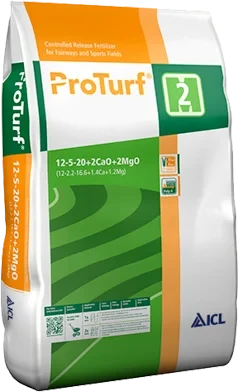
PROTURF Hi K (12-2.2-16.6+2Ca+2Mg)
PROTURF Hi K (12-2.2-16.6+2Ca+2Mg)
Freight quotes required. Please fill out our freight quote form to receive a custom price including delivery for this product.
Couldn't load pickup availability
Stronger Roots, Better Disease Resistance — High Potassium Controlled Release
ProTurf Hi K combines controlled release technology with compound fertilisers to deliver steady, balanced nutrition without growth peaks. Its high potassium content strengthens turf against disease and stress, while calcium hardens the plant and magnesium enhances colour.
Key Benefits
- 💪 High potassium — strengthens turf against disease, drought and wear
- ⏳ Controlled release — steady nutrition for 2–3 months without growth flushes
- ⚡ Immediate + sustained response — uncoated portion delivers fast initial green-up
- 🧊 Contains calcium — hardens turf for improved resilience
- 🟢 Contains magnesium — enhances deep green colour
- ✅ Suitable for all turf types — lawns, sports fields, golf courses
Application
- Rate: 20–35g per m² (200–350 kg/ha)
- Longevity: 2–3 months
- Pack size: 25 kg
Frequently Asked Questions
Why is high potassium important for turf?
Potassium strengthens turf cell walls, improving resistance to disease, drought, heat stress, and wear. It's the key nutrient for hardening turf heading into stressful conditions.
When is the best time to apply ProTurf Hi K?
Apply before periods of stress — late spring before summer heat, or late summer/autumn before winter. It's also ideal for high-traffic areas like sports fields year-round.
Is ProTurf Hi K suitable for golf courses and sports fields?
Absolutely — it's a professional-grade product used widely on golf courses, sports fields, and commercial turf applications across Australia.
Can I use ProTurf Hi K alongside other fertilisers?
Yes, but avoid overlapping with other controlled release products to prevent over-application. Always calculate total nutrient load across all products being used.
What's the difference between ProTurf Hi K and ProTurf NPK?
Hi K has significantly more potassium (16.6% vs 12.4%) and less nitrogen (12% vs 15%), making it better suited for stress hardening rather than general growth promotion.